For Chinese companies, the bet is that lower prices and more AI features will convince people to wear smart glasses all day and have their lives constantly recorded via video and audio. If you drop the price to around $200, “people will start using them every day,” says Brian Chen, general manager of Appotronics' innovation center. That shift would come with obvious privacy and security concerns that both Rokid and Appotronics have acknowledged, but they see the potential payoff as worth the risk.
From vacuum cleaners to cars
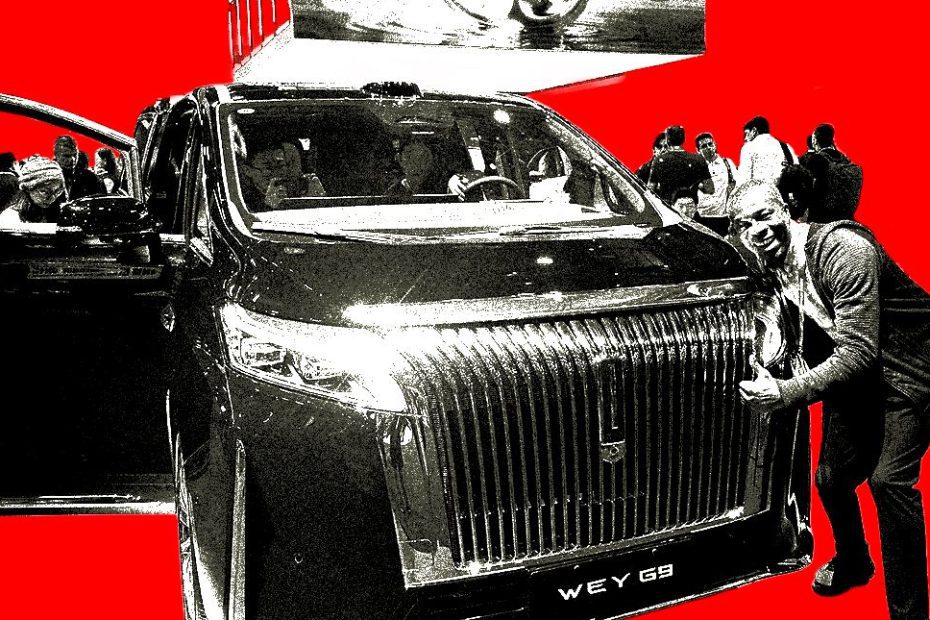
Several major Chinese electric vehicle makers, including Geely and Great Wall Motor, brought their cars to CES, but what stole the show were two brands that almost no one had heard of before. Nebula Next and Kosmera both showed off sleek, luxurious prototypes of electric sports cars, neither of which are yet available on the market. Both brands have connections to Dreame, a leading Chinese robot vacuum cleaner company, but claim to operate independently. However, at CES, Nebula Next and Kosmera booths were linked to Dreame in the conference directory.
Beyond this complicated business relationship, the idea of a robot vacuum cleaner company investing in electric vehicles isn't as absurd as it sounds. In any case, it's just the latest example of how Chinese electronics companies are using their existing manufacturing expertise to make cars. The founder of Roborock, another Chinese vacuum cleaner company, started an EV company in 2023. Xiaomi, the Chinese smartphone and home appliance giant, launched its first EV in 2024.
Dreame isn't the first and won't be the last Chinese company to make the transition from electronics to electric cars, says Lei China's advanced supply chain, engineering talent and manufacturing ecosystem make it relatively easy for newcomers to take a stab at building cars, Xing explains, but only a few will succeed. Others might be more like Apple, whose long-running car project eventually collapsed. “Life and death will be a natural outcome,” says Xing.
Robovans are coming
When I went back to China last year, I made sure to try Baidu's robotaxi service, which is roughly comparable to Alphabet's Waymo in the US. What surprised me in China, however, was how many autonomous parcel delivery vehicles were driving alongside my robotaxi through the same open streets.
Neolix is the leading company in China that makes both the hardware and software for robovans. It says the number of vehicles deployed in China will increase about tenfold every year and will reach about 10,000 by 2025. (By comparison, there are about 2,500 Waymo cars on the road in the U.S.) Neolix claims to represent more than 60 percent of the market and has no major competitors globally, says Zhao You, the company's executive president. Neolix brought three of its cars to CES, ranging in size from a mini refrigerator to a golf cart: small, windowless boxes on oversized wheels, with no driver inside.
Neolix is keen to expand internationally and already has pilot projects underway in the Middle East, East Asia and Latin America. The company also has an eye on the American market. Zhao told me he's aware that any self-driving company in the U.S. will come under heavy scrutiny for safety and data security, but he hopes to work with local partners who can help navigate compliance requirements here. “As a technology company, working with one cloud service provider for each market is the most affordable option, but that won't work. You need to talk to local regulators and find out which cloud providers they approve,” Zhao says.
Generate viral videos
When OpenAI launched Sora 2 last year, it ambitiously gambled that generative AI could be not just a tool, but a content genre big enough to support an entire social media platform. That vision hasn't fully materialized yet, but at CES I met two AI video companies competing with OpenAI's Sora.
Kling is the AI division of Kuaishou, a hugely popular Chinese short video platform. The Kling app and website together have more than 60 million registered users, the majority of whom are based outside China, according to the company. About 100 people attended Kling's panel event at CES with the platform's power users. Jason Zada, an award-winning director who created Coca-Cola's controversial 2024 AI-generated Christmas commercial, said he recently used Kling to generate a YouTube video in which a fireplace burns quietly as Santa Claus, turkeys, astronauts and snowmen inexplicably appear. Zada said he shot more than 600 clips with Kling and put them together to create the final 105-minute video. It cost about $2,500 in token credits.