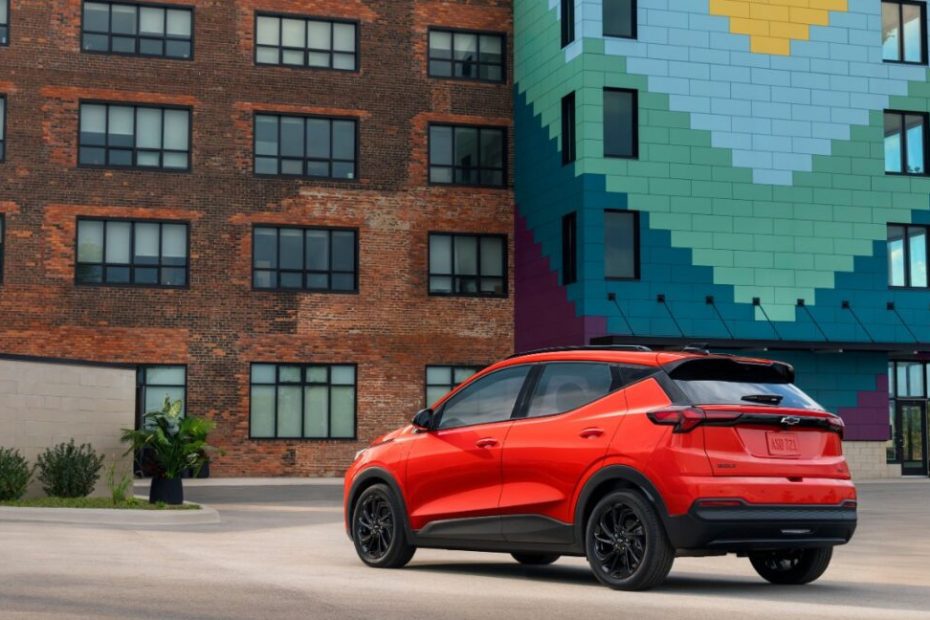
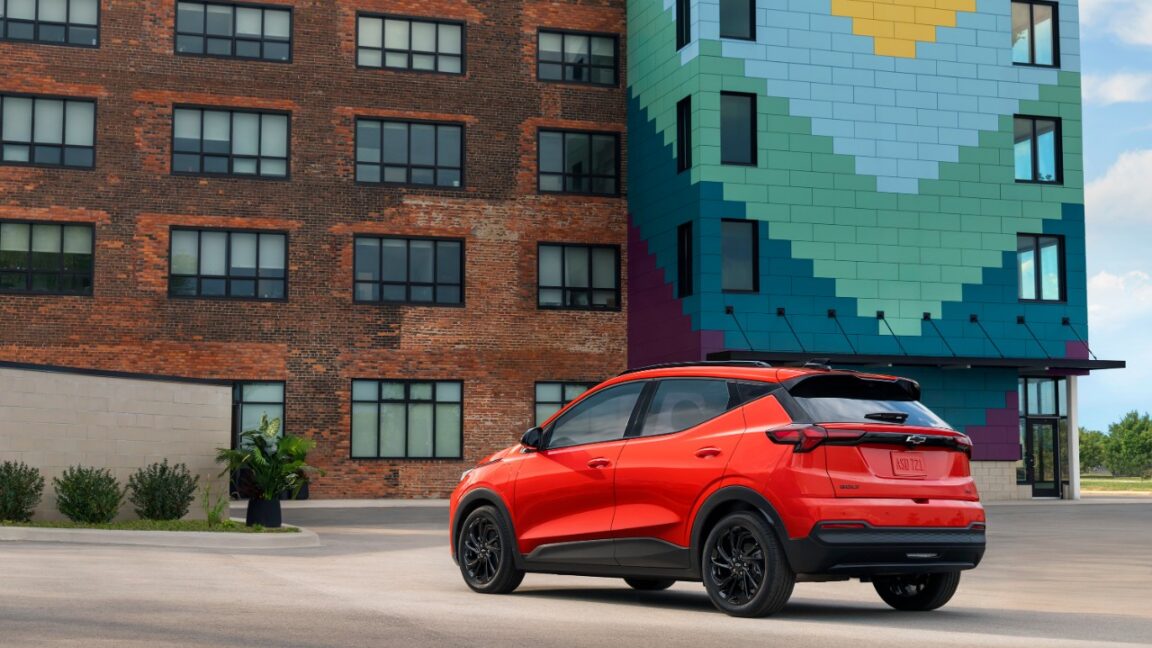
Redesigning the Bolt for a new battery pack wasn't a quick process. The cells, modules and electronics are all different, but had to fit in the same space with the same mounting points as the original. And GM's own LFP plant won't be producing cells until sometime next year. This means that for the time being, GM is importing LPF cells from CATL in China, paying expensive tariffs.
In October, Chevy announced prices: $28,995 (plus $1,395 delivery fee) for the Bolt LT, or $32,995 for the Bolt RS. Eventually – we're not sure when – there should be a stripped-down model that starts at less than $28,000. For the record, this is more expensive than the Bolt EUV we reviewed in late 2022, especially when you take the trim levels into account. And of course it is now no longer possible to cast your Apple or Android phone to the new infotainment system. And the 2027 model year Bolt makes a lot less torque than the Bolts we're used to driving, which could mean a very different experience on the road considering how important that tidal wave of torque is to how an EV feels.
Now Chevy has released the all-important information: 422 km of range according to EPA testing, a slight improvement over the 398 km range of the old Bolt EUV. The better news is that fast charging is almost three times more powerful. Where the old Bolt reached a peak power of 55 kW, often infuriating other EV drivers as they waited to rush around crowded charging stations, the new car will reach speeds of up to 150 kW, meaning a 10 to 80 percent charge will take just 26 minutes, not nearly an hour.
Chevy says the new Bolt is already in dealerships in both LT and RS guises. But the inventory check isn't looking for MY27 vehicles yet, so we haven't been able to confirm that. The company has also said that the car is only back “for a limited time.” While we won't get into what “limited” means in this context, we can't tell you how many cars the automaker will actually build.