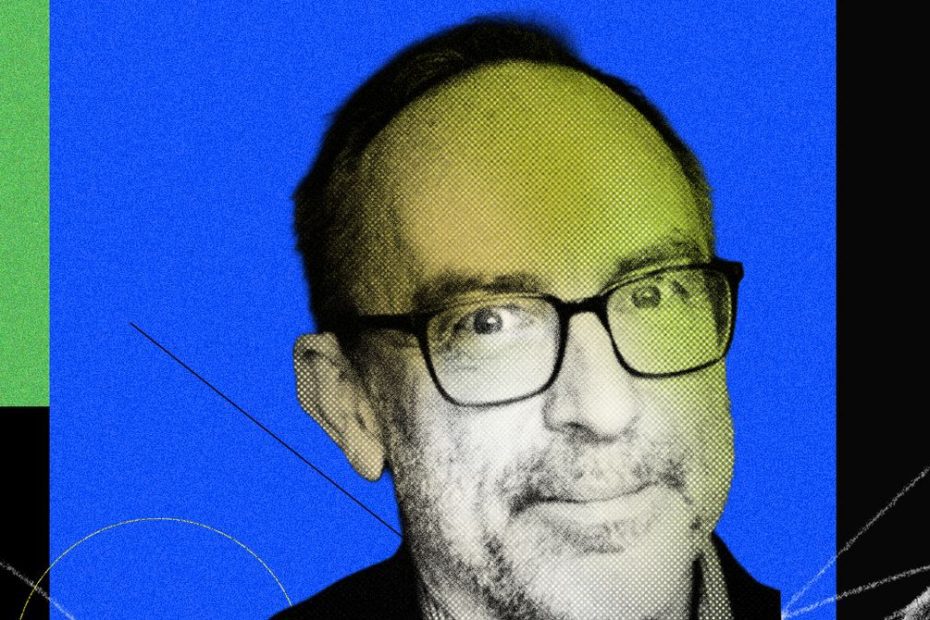
Jimmy Wales from Wikipedia has been called the last decent technology baron. It sounds like a flattering label, although I usually associate it more with carnivores who live on yachts and feed their herds of cattle with homegrown macadamia nuts; the kind of person who could last be found having dinner with the President of the United States and his cabal of MAGA sycophants.
Wales, on the other hand, keeps it relatively quiet. Even as the site he founded, Wikipedia, celebrates its 25th anniversary this month, he seems more interested in fixing his home Wi-Fi than participating in the performative power games of the tech elite. He has also been promoting a new book in recent months, The seven rules of trustwhich uses the overarching strategy and unlikely rise of Wikipedia to formulate Wales' playbook for fixing much of what's broken in today's deeply polarized and antagonistic society.
On this week's episode of The Big Interview, Wales and I discussed what it means to build something that is used by billions of people and that isn't optimized for growth at all costs. During our discussion, he reflected on Wikipedia's messy, human origins, the ways in which governments from Russia to Saudi Arabia have been targeted by Wikipedia, and the challenges of maintaining the line of neutrality in an online ecosystem that is hostile to the idea that facts exist at all. We also talked about what's threatening Wikipedia now, from AI to conspiracy-ridden billionaires, and why he'll never edit a post about Donald Trump. Read our full conversation below.
This interview has been edited for length and clarity.
KATIE DRUMMOND: Jimmy Wales, welcome to The Big Interview. Thank you so much for being here.
JIMMY WALES: Thanks for having me on.
We always start these conversations with a few short questions, like a little warm-up for your brain. Are you ready?
Yes.
What internet rabbit hole have you found yourself down the most lately?
Home assistant. I just started using Home Assistant to use smart home devices, and there is a huge community and thousands of things to read about and so on. So it's what I'm obsessed with.
What does this community do?
Troubleshooting. People are working on extensions to deal with all kinds of things in the world, and it's amazing.
What topic do you never discuss online anymore?
I would say I don't argue with anyone about trans issues. It makes absolutely no sense. It's too toxic. I've never had an argument about it, but I don't even talk about it.
You just stay away.
Yes, it's too unpleasant.
What do you trust more: Wikipedia or ChatGPT?
Definitely Wikipedia.
I had to ask. What's your favorite website or app that isn't Wikipedia?
I really like parts of Reddit. There are some really great communities on Reddit, and great people. I lurk and read in the personal finance subreddit. There are just a lot of nice people there. I'm always amazed by it.
Reddit is really having a moment. I find myself spending a lot more time lurking in the Reddit app on my phone because I'd rather read thoughtful conversations than scroll X.
That's exactly it. It's like a place with paragraphs.
And often very attentive people. What's the best thing about living in Britain versus the US?
Well, my family is here. I always say this about the US: technology is in Silicon Valley, and politics is in Washington, and movies and showbiz are in LA, and the financial industry is in New York. But all those things are in London.
So if I lived in Silicon Valley, I would only have tech friends because those are the ones who live there. While in London it is much more extensive. All kinds of people. So I like that.