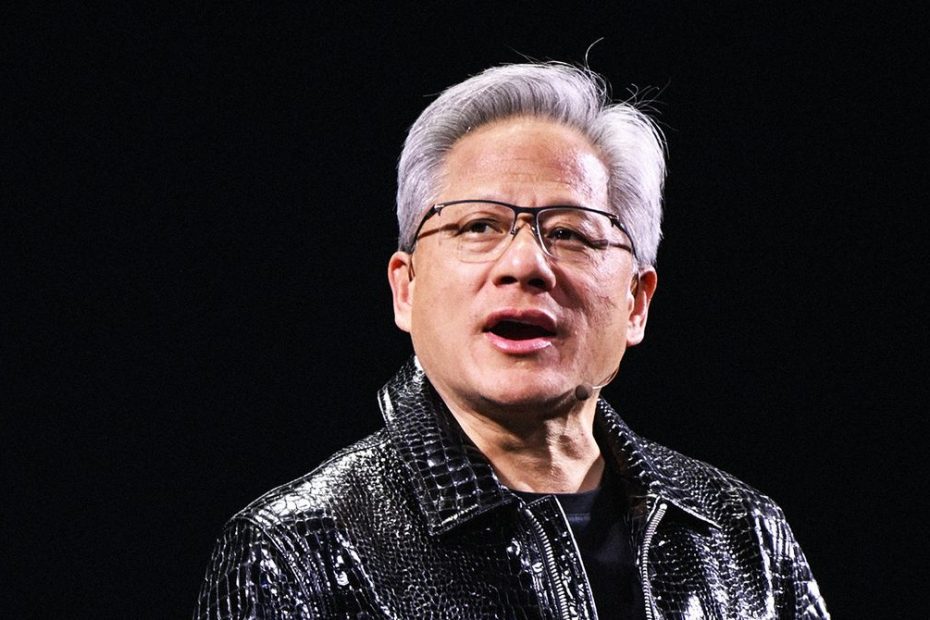
Nvidia CEO Jensen Huang says Vera Rubin, the company's next-generation AI superchip platform, is on track to arrive to customers later this year. “Today I can tell you that Vera Rubin is in full production,” Huang said Monday during a press event at the annual CES technology fair in Las Vegas.
Rubin will reduce the cost of running AI models to about one-tenth of Nvidia's current leading chip system, Blackwell, the company told analysts and journalists on a call on Sunday. Nvidia also said Rubin can train certain large models with about a quarter as many chips as Blackwell needs. Taken together, these gains could make advanced AI systems significantly cheaper to use and make it harder for Nvidia customers to justify moving away from their hardware.
Nvidia said on the call that two of its existing partners, Microsoft and CoreWeave, will be among the first companies to offer services powered by Rubin chips later this year. Two large AI data centers that Microsoft is currently building in Georgia and Wisconsin will eventually house thousands of Rubin chips, Nvidia added. Some of Nvidia's partners have started running their next-generation AI models on early Rubin systems, the company said.
The semiconductor giant also said it is working with Red Hat, which makes open source business software for banks, automakers, airlines and government agencies, to offer more products that will run on the new Rubin chip system.
Nvidia's latest chip platform is named after Vera Rubin, an American astronomer who changed the way scientists understand the properties of galaxies. The system includes six different chips, including the Rubin GPU and a Vera CPU, both of which are built using Taiwan Semiconductor Manufacturing Company's 3-nanometer manufacturing process and the most advanced bandwidth memory technology available. Nvidia's sixth generation interconnect and switching technologies connect the different chips together.
Every part of this chip system is “completely revolutionary and best-in-class,” Huang stated during the company's CES press conference.
Nvidia has been developing the Rubin system for years, and Huang first announced the chips would arrive during a keynote speech in 2024. Last year, the company said systems built on Rubin would arrive in the second half of 2026.
It's unclear what exactly Nvidia means when it says Vera Rubin is “in full production.” Normally, production of these advanced chips – which Nvidia builds with its long-time partner TSMC – starts at low volume, while the chips are tested and validated and ramped up at a later stage.