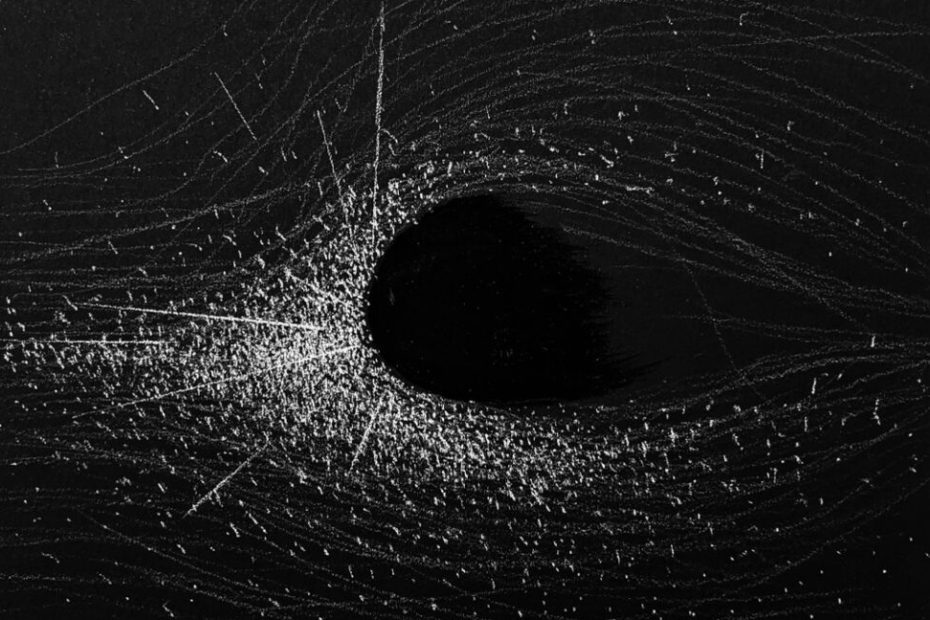
Gamwell, for example, sees echoes of Mitchell's dark stars in Edgar Allan Poe's short story, “A Descent Into the Maelstrom,” especially in Harry Clarke's evocative 1919 illustration. “This seemed like an early analogy to a black hole to many people when the concept was first proposed,” says Gamwell. “It's a mathematical construct at that point, and it's very difficult to imagine a mathematical construct. Poe actually had a dark star in mind. [elsewhere in his writings].”
The art on display spans nearly every medium: charcoal sketches, pen-and-ink drawings, oil or acrylic paintings, murals, sculptures, traditional and digital photography, and immersive room-sized multimedia installations, such as a 2021-2022 piece called Gravity arena by the Chinese artist Xu Bing. “Xu Bing does most of his work on language,” says Gamwell. For Gravity arena“He takes a quote about language from Wittgenstein and translates it into his own script, the English alphabet written to look like Chinese characters. Then he applies gravity to it and turns it into a singularity.” [The installation] is several stories high and he covered the gallery floor with a mirror. So you walk up and you see it looks like a wormhole, which he makes an analogy for translation.
“Everything near a black hole is violently torn apart by its extreme gravity – the strongest in the universe,” Gamwell writes of black holes' enduring appeal as artistic inspiration. “We see this violence in the work of artists like Cai Guo-Qiang and Takashi Murakami, who have used black holes to symbolize the brutality unleashed by the atomic bomb. The inescapable pull of a black hole is also a ready-made metaphor for depression in the work of artists like Moonassi. On the one hand, the black hole offers artists a symbol to express the devastation and fears of the modern world. On the other hand, the extreme severity of a black hole, however, is the source of astonishing energy, and artists like Yambe Tam invite viewers to embrace the darkness as a path to transformation, awe and wonder.
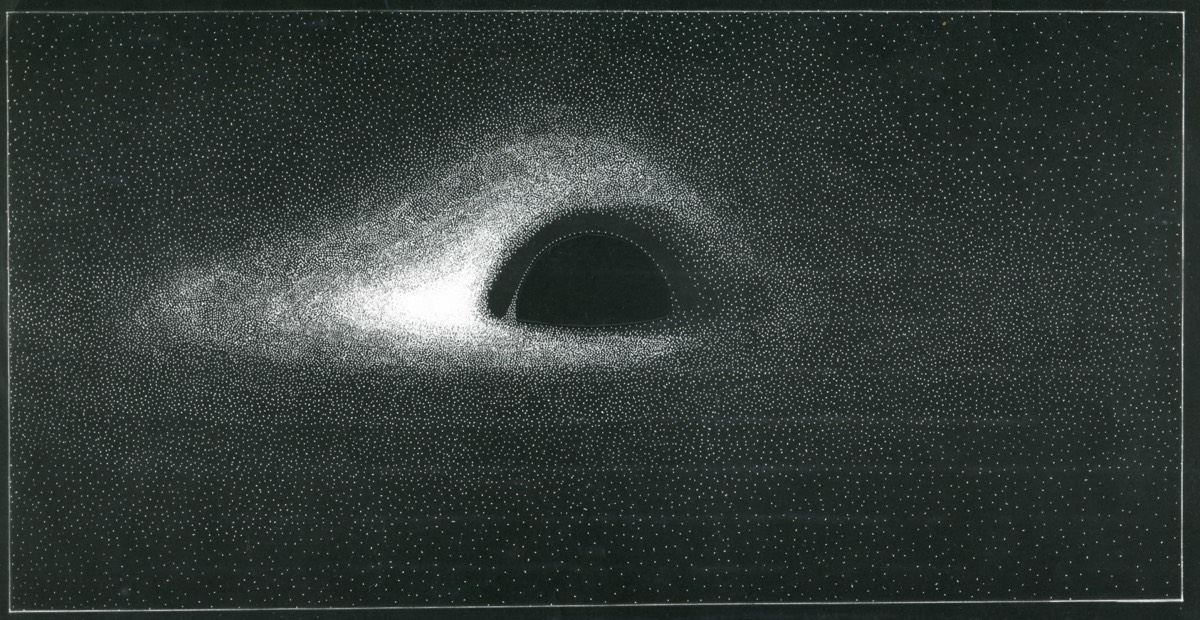
One of the first scientific images of a black hole, 1979. Ink on paper, photographically reversed.
Jean-Pierre Luminet/Astronomy and Astrophysics 1979
One of the first scientific images of a black hole, 1979. Ink on paper, photographically reversed.
Jean-Pierre Luminet/Astronomy and Astrophysics 1979
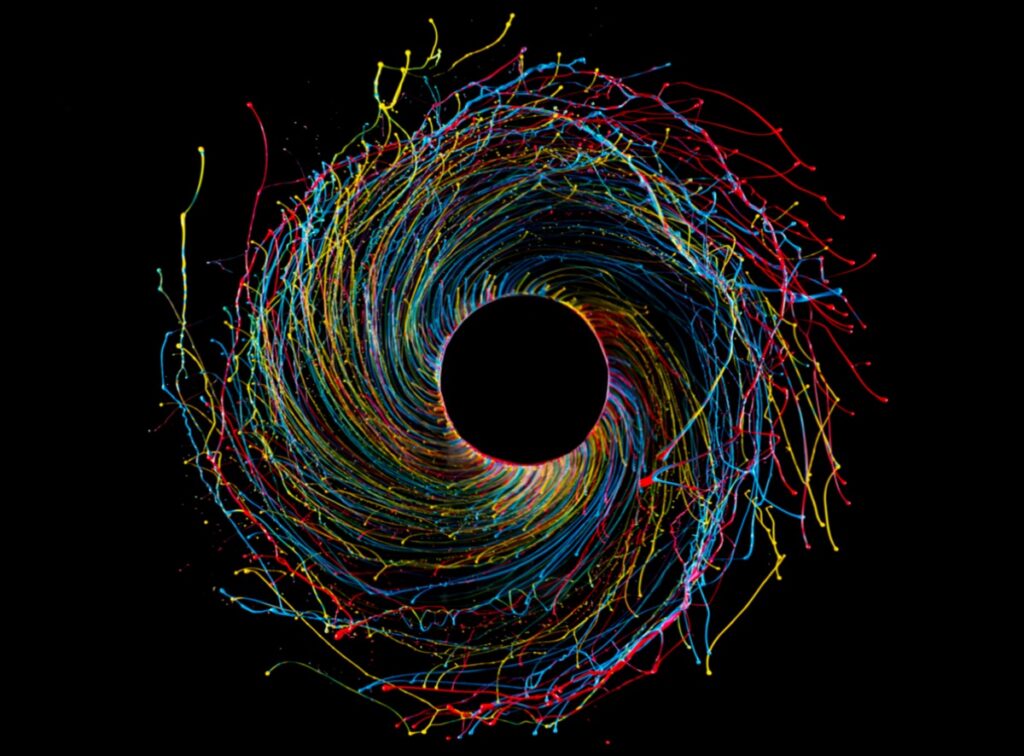
Fabian Oefner, Black hole, no. 22014. Inkjet print
Thanks to Fabian Oefner
Fabian Oefner, Black hole, no. 22014. Inkjet print
Thanks to Fabian Oefner
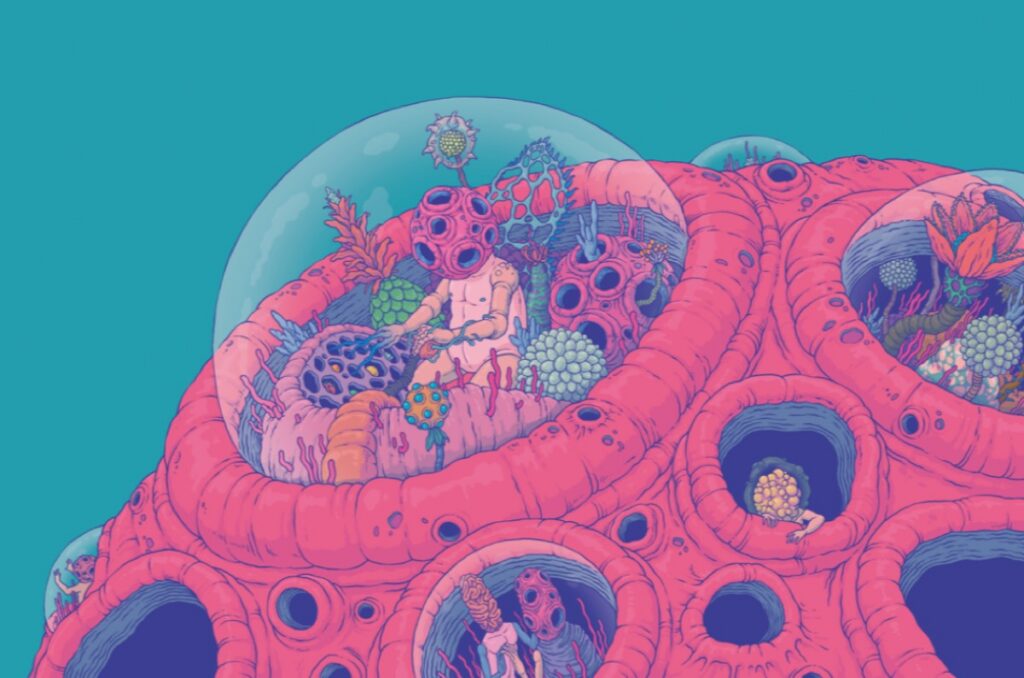
Sangho Bang, Spaceship2018. Digital print
Thanks to Sangho Bang
Sangho Bang, Spaceship2018. Digital print
Thanks to Sangho Bang
Fabian Oefner, Black hole, no. 22014. Inkjet print
Thanks to Fabian Oefner
Sangho Bang, Spaceship2018. Digital print
Thanks to Sangho Bang

Eric Heller Black holes that merge2020. Digital image
Thanks to Eric Heller
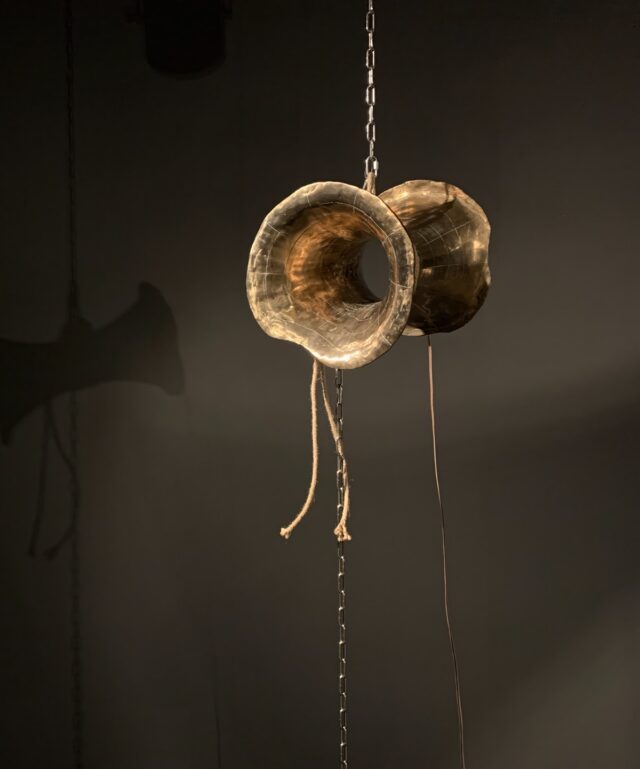
Yambe Tam, Wormhole bell2018. Cast bronze
Private collection. Photo: Albert Barbu
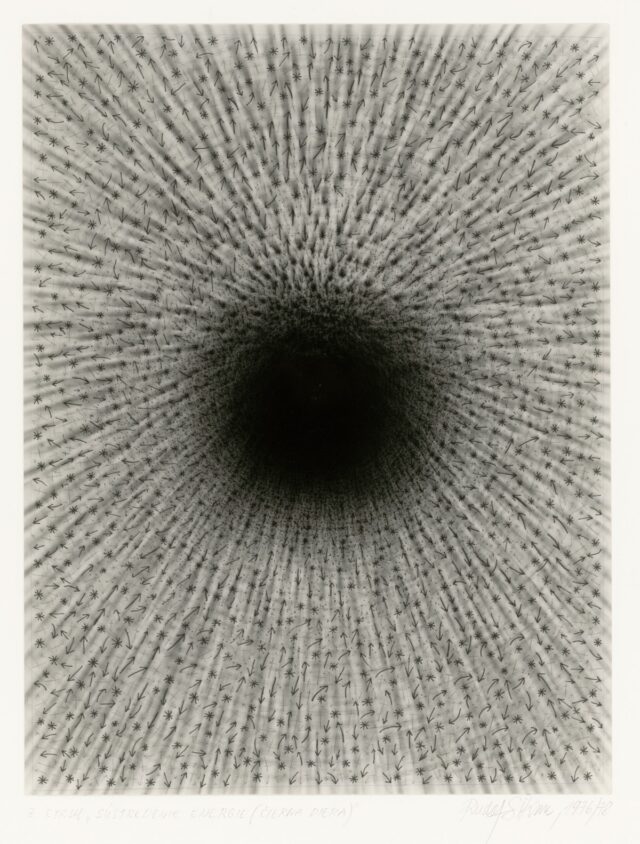
Rudolf Sikora, Black Hole II1976–1978, from the series Concentration of energy. Photo.
Slovak National Gallery, Bratislava, Slovakia
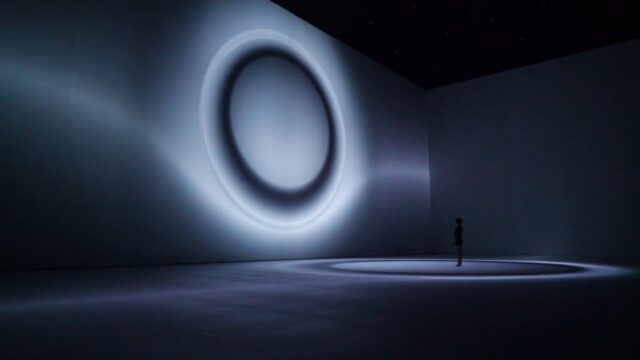
Yuxi Cao, Oriens: immersive black hole2017. Sound and video installation at Today Art Museum, Beijing
Thanks to Yuxi Cao
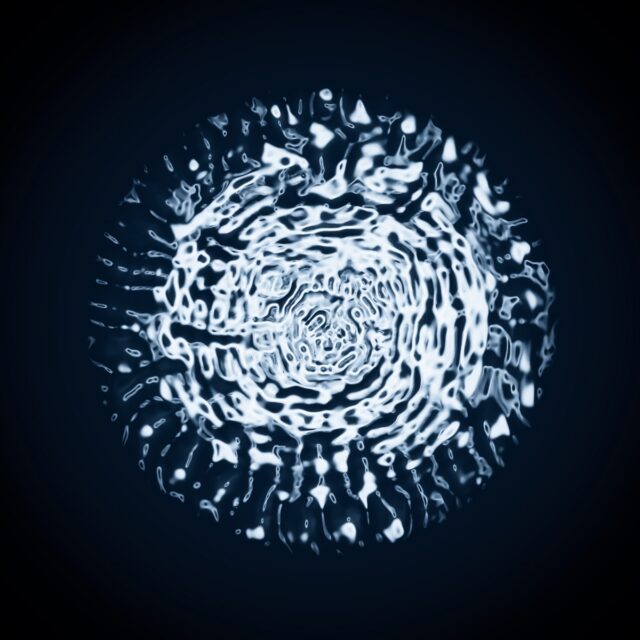
Johannes White, Black echo2023. Digital photo
Thanks to John White