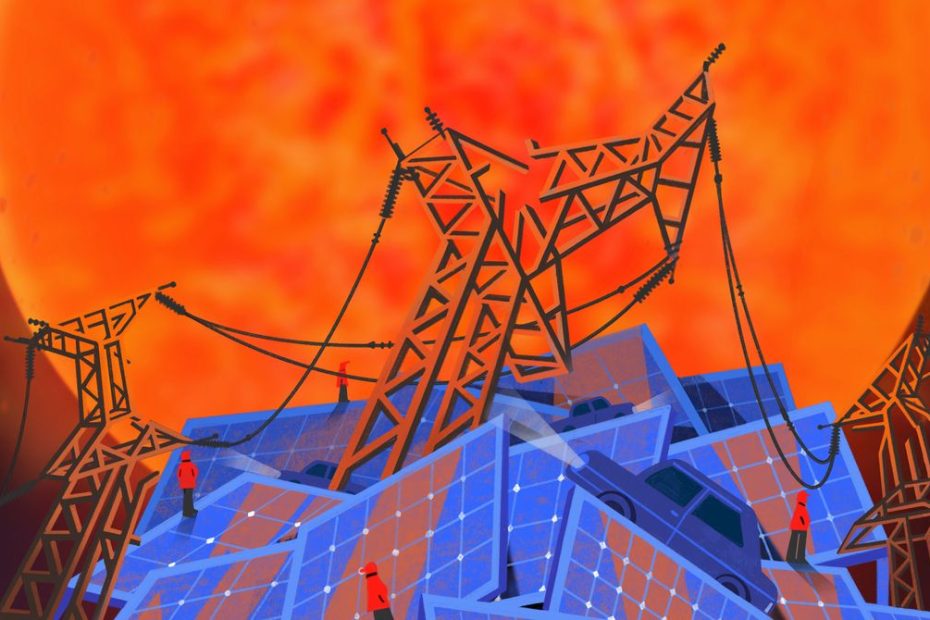
The biggest beneficiaries of China's renewable energy revolution may well be consumers, both inside and outside China. In sun-drenched Australia, where almost a third of all households have solar panels on their roofs, Energy Minister Chris Bowen has proposed a 'solar sharing scheme' to provide three hours of free electricity on sunny days. Solar and battery systems have allowed Hawaii to close its last coal-fired power plant, and such systems are similarly helping other islands like Jamaica reduce their need for imported fossil fuels.
One country – especially one leader – is trying to break this trend. Donald Trump hates many people and things, but wind turbines and solar panels seem to hold a special place of contempt in his heart. His administration has sought to cancel major offshore and onshore wind energy projects, along with plans for Esmerelda 7, a solar megabase in the Nevada desert that would have been worthy of western China. Trump and his Secretary of Energy, Chris Wright, often talk about American energy dominance, but they are crippling the ability of American companies to deploy and build the cheapest sources of electricity in the history of this planet, in favor of a combination of longstanding arguments about the inevitability of fossils and gambling on small modular nuclear reactors and, yes, fusion.
Even among billionaires who don't share Trump's belief that climate change is a hoax, this latest affinity for far-flung, disruptive technologies has long been a hallmark of American climate investing and philanthropy. This attitude is epitomized by Bill Gates, who once dismissed existing green technologies such as solar and wind energy as “cute.” Instead, Gates has always preferred a grand, capital-intensive variant of decarbonization, pouring dollars into sci-fi technologies that will last in a perpetual state of just five years — not the quick, messy approach that sees solar panels appear on every roof and electricity price controls recalibrated. (Recently, just as it became clear that the transition to renewables was moving from success to success, Gates wrote a memo saying he was withdrawing from climate finance altogether.)
Mao Zedong once declared that a revolution is not a dinner party. It is an uprising, an act of violence in which one class overthrows another. The green technology revolution – whose violence is largely financial, a devastating attack on the value of fossil companies' assets – is not a dinner party. It is also not inevitable. It can still be stopped or slowed down. Yes, it is the result of the conscious choices of people, companies and governments, many of which are the most critical in China. But it is happening now, and faster than our systems – power grids, industrial sectors, labor, geopolitics and more – are ready for.
And that's a good thing, because there is another force, powered by the sun's fusion, that is also reaching a force and magnitude we are unprepared for: climate change. When Category 5 Hurricane Melissa tore through Jamaica, Haiti, Cuba and the Dominican Republic in late October, killing more than 90 people and leaving tens of thousands homeless, most government investments in protecting people from the storm were not up to the challenge. What did provide some protection were the solar panels on the roof, which kept the lights on when the sun rose the next morning. A global energy system underlies modern life. Through all the chaos, that system is getting a major upgrade.
Let us know what you think of this article. Send a letter to the editor at mail@CBNewz.