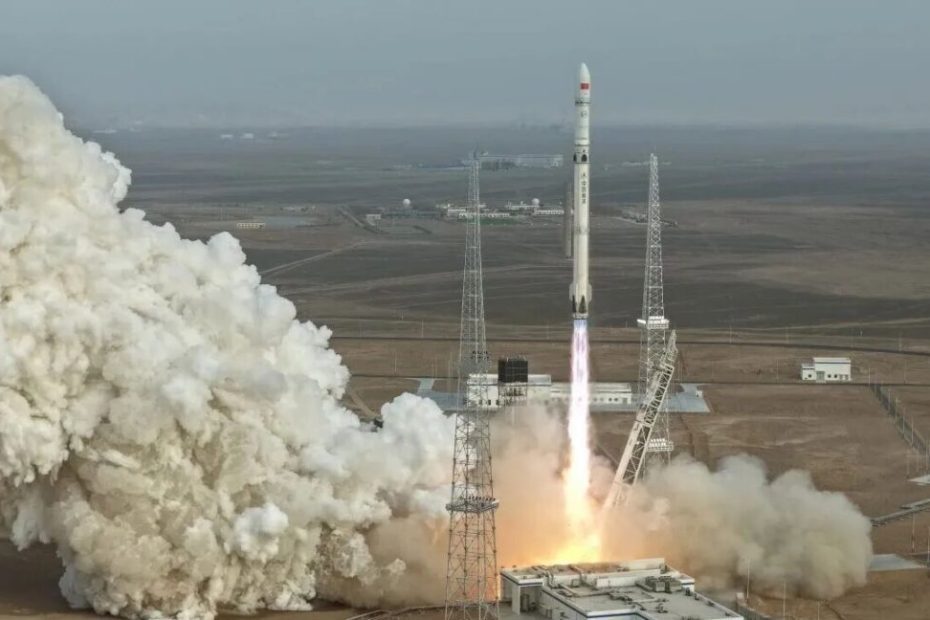

For the second time this month, a Chinese rocket designed for reuse successfully flew into low Earth orbit on its maiden flight Monday, defying the dubious odds that tax the introduction of new launch vehicles.
The first Long March 12A rocket, about the same height and diameter as SpaceX's workhorse Falcon 9, lifted off from the Jiuquan Satellite Launch Center on Monday at 9 p.m. EST (2 a.m. UTC Tuesday).
Less than ten minutes later, the rocket's methane-fueled first stage booster hurtled through the atmosphere at supersonic speed, impacting a remote area some 200 miles (320 kilometers) away from the Jiuquan spaceport in northwest China. The booster failed to complete a brake burn to slow down and land at a prepared location near the edge of the Gobi Desert.
The Long March 12A upper stage performed as intended and successfully reached the mission's “predetermined orbit,” according to the China Aerospace Science and Technology Corporation (CASC), the state-owned company that leads the country's space industry.
“The first phase could not be successfully restored,” the company said in a statement. “The specific reasons are currently being further analyzed and investigated.”
A stable of reusable rockets
This outcome is similar to the results of the maiden flight of another Chinese mid-range rocket, the Zhuque-3, on December 2. The Zhuque-3 rocket was developed by a privately funded startup called LandSpace. Similar in size and performance to the Long March 12A, the Zhuque-3 also reached orbit on its first launch, and its recoverable booster stage crashed during a landing attempt. The Zhuque-3's first stage touched down next to the landing zone, while the Long March 12A appeared to have missed by at least a few kilometers.
“While this mission did not achieve the planned recovery of the rocket's first stage, it obtained critical technical data under the rocket's actual flight conditions, providing an important foundation for subsequent launches and reliable stage recoveries,” CASC said. “The research and development team will immediately conduct a comprehensive review and technical analysis of this testing process, fully investigate the cause of the failure, continuously optimize the recovery plan, and continue to promote the verification of reusable technology.”