OpenAI plans to do that begin testing ads in ChatGPT in the coming weeks, marking a significant shift for one of the world's most widely used AI products. The company announced Friday that the first ad tests will be rolled out in the United States before expanding globally.
OpenAI says that ads will not affect ChatGPT's responses, and that all ads will appear in separate, clearly labeled boxes directly below the chatbot's response. For example, if a user asks ChatGPT for help planning a trip to New York City, they will still get a canned response from the chatbot and may also see an ad for a hotel in the area.
“People rely on ChatGPT for many important and personal tasks, so as we introduce ads, it's critical that we preserve what makes ChatGPT valuable in the first place,” OpenAI CEO Fidji Simo wrote in a blog post announcing the ad trial. “That means you have to trust that ChatGPT's responses are driven by what's objectively useful, and never by ads.”
The first ads will appear for logged-in users on ChatGPT's free tier, as well as the $8 per month Go tier, which is rolling out to users in the United States starting Friday. The Go tier, which is already available in India, France and other countries, allows users to send more messages and generate more images than the free version. OpenAI says users on the Plus, Pro, and Enterprise plans won't see any ads.
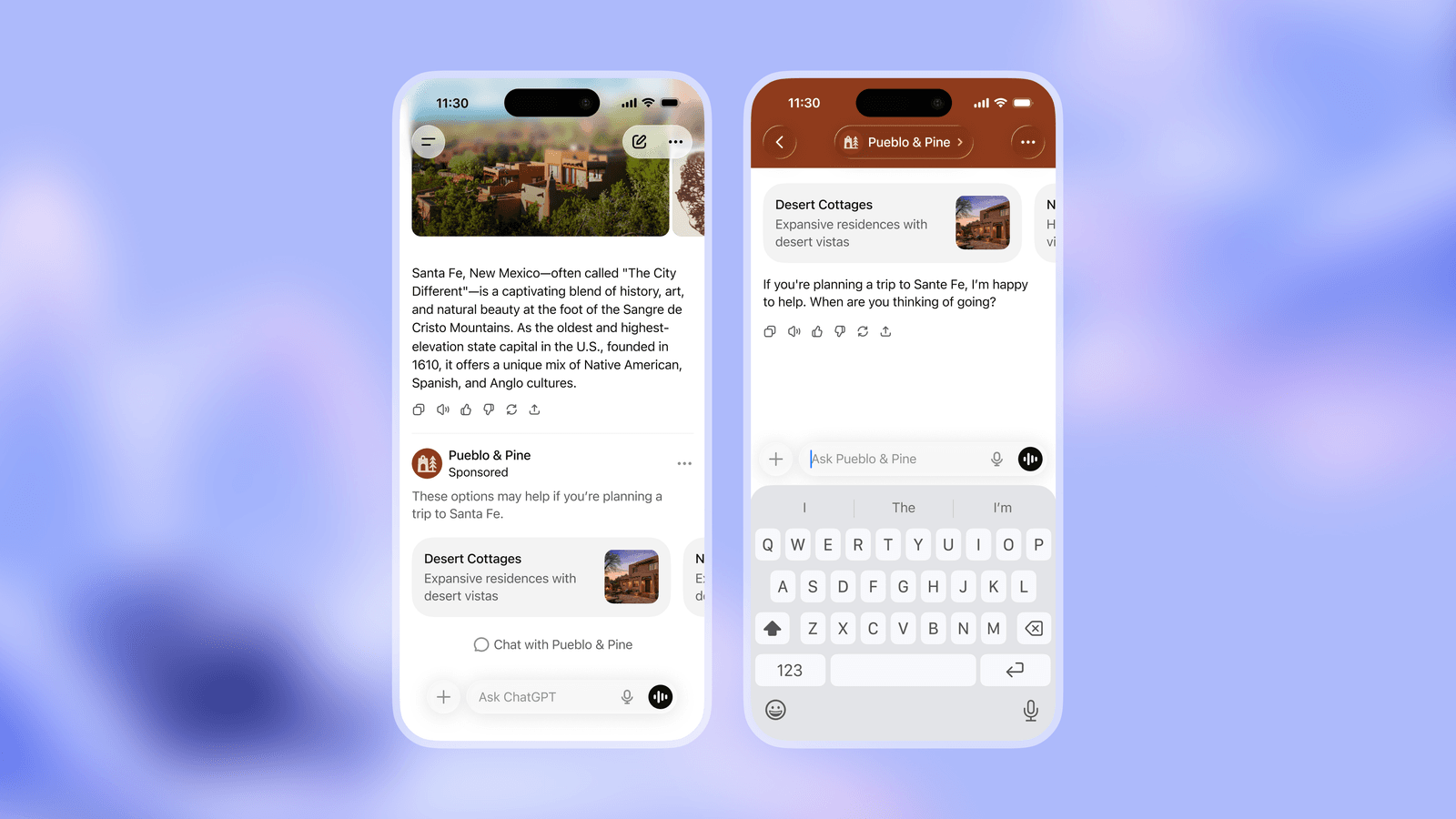
Photo: Courtesy of OpenAI
OpenAI also outlined the principles guiding its approach to advertising.
The company says it will not sell user data or reveal conversations with ChatGPT to advertisers. This means that advertisers cannot see information about a user's age, location or interests; This is often the case when users are targeted with ads across a large part of the internet.
Instead, an OpenAI spokesperson told WIRED that the company will show advertisers aggregated ad performance metrics, such as how many times an ad appeared in ChatGPT or how many users clicked on it.
To determine which ads to show people, OpenAI says it will match conversation topics with relevant ads. Some of a user's personalization data may be used in that process, the spokesperson said, but the company says users can disable the data used for ads without disabling ChatGPT's other personalization features.
The spokesperson declined to describe exactly what data OpenAI will collect about users to serve relevant ads, but ChatGPT already collects a lot of other data to improve the chatbot's responses. Users can ask the chatbot to remember personal characteristics, such as hobbies, dietary restrictions and other preferences, to tailor responses. Over the past year, OpenAI has expanded the product's memory features to allow ChatGPT to reference previous chats in its responses. The company says in its blog post that “users can delete the data used for advertising at any time.”