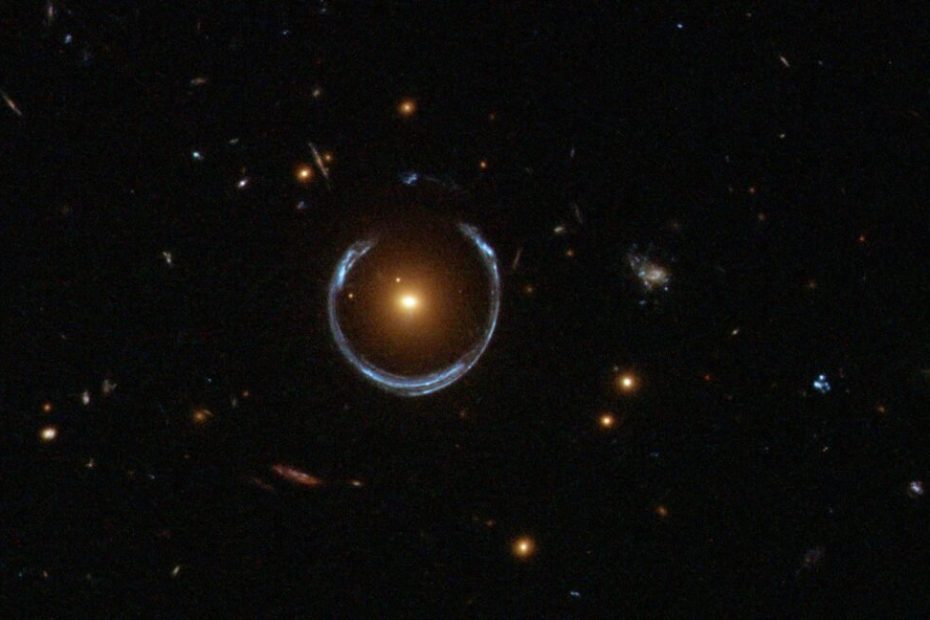
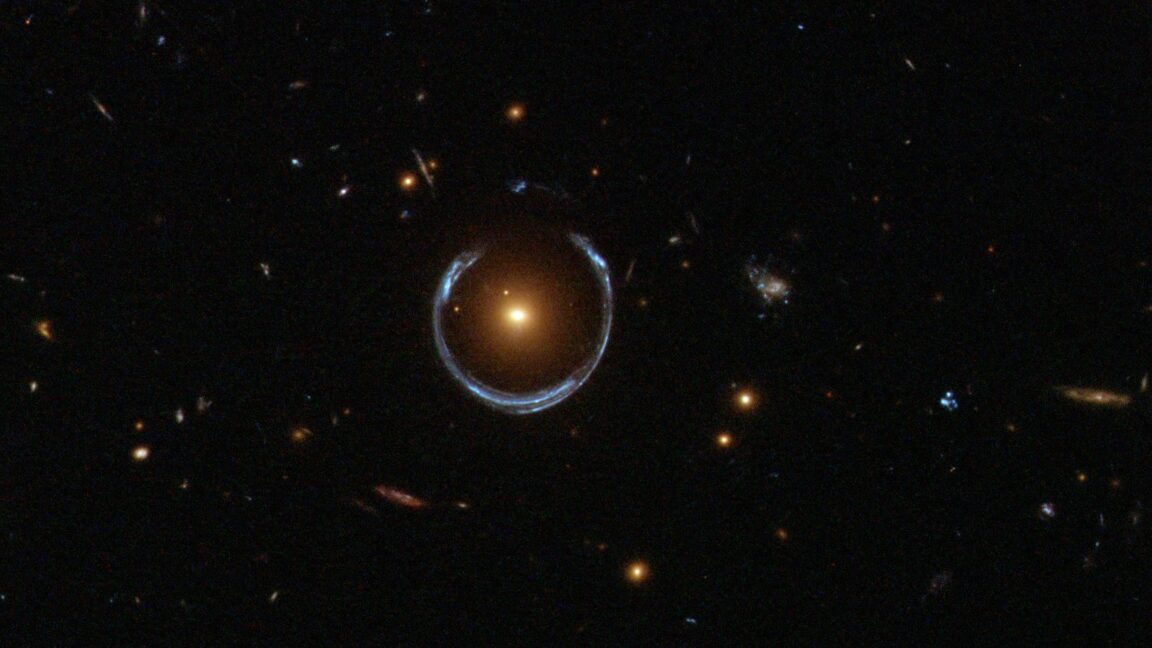
Most of the exoplanets we discovered were in relatively tight orbits around their host stars, allowing us to track them as they circled repeatedly. But we've also discovered a handful of planets through a phenomenon called microlensing. This happens when a planet passes between the line of sight between Earth and another star, creating a gravitational lens that distorts the star, making it briefly brighten.
The most important thing about microlensing compared to other methods of finding planets is that the lensed planet can be close everywhere on the line between the star and the Earth. In many cases, these events are driven by so-called rogue planets: planets that are not part of an exosolar system at all, but float through interstellar space. Now researchers have used microlensing and the coincidental orientation of the Gaia Space Telescope to discover a planet the size of Saturn that is the first to be found in what's called the 'Einstein Desert', which may tell us something about the origins of rogue planets.
Goes rogue
Most of the planets we identified orbit stars and formed from the disks of gas and dust that surrounded the star early in its history. We've imaged many of these disks and even seen some with clues to planet formation within them. So how do you get a planet that isn't bound to stars? There are two possible routes.
The first involves gravitational interactions, either between the system's planets or as a result of an encounter between the exosolar system and a passing star. Under the right conditions, these interactions can knock a planet out of orbit and hurtle through interstellar space. As such, we should expect them to resemble any typical planet, ranging in mass from small, rocky bodies to gas giants. An alternative method of creating a rogue planet starts with the same gravitational collapse process that builds a star, but in this case the gas literally runs out. What remains is likely a large gas giant, possibly somewhere between Jupiter and a brown dwarf star in mass.